
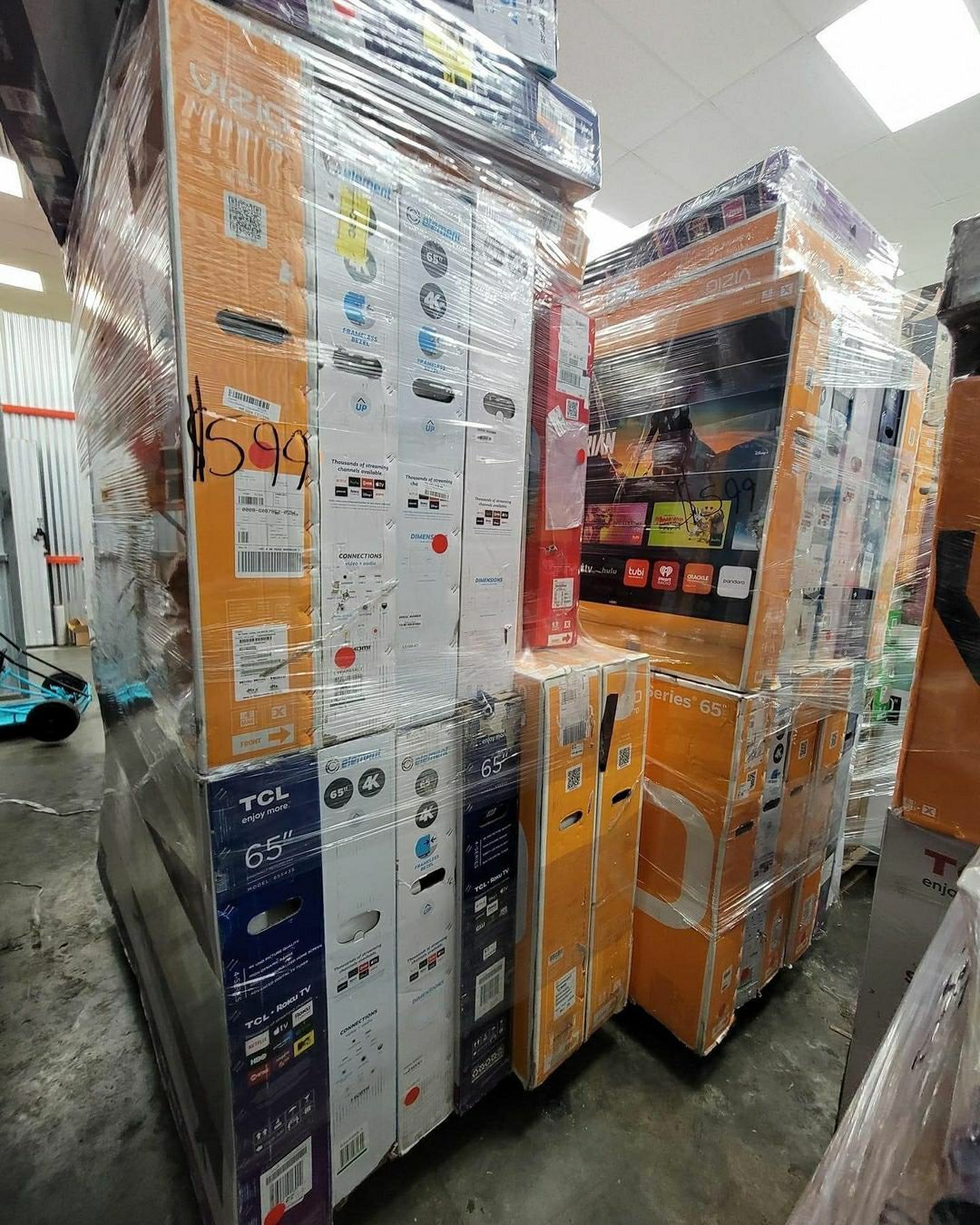
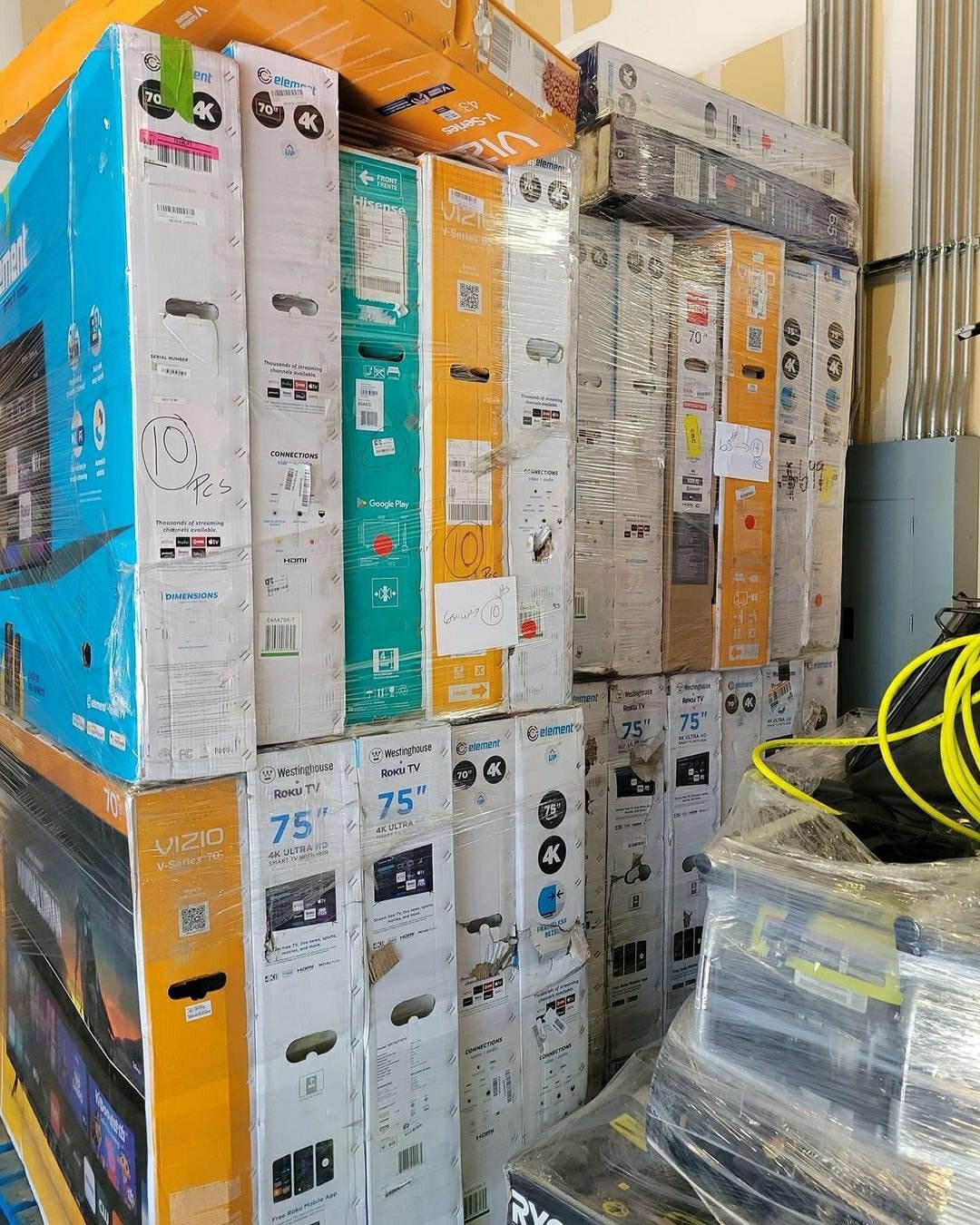
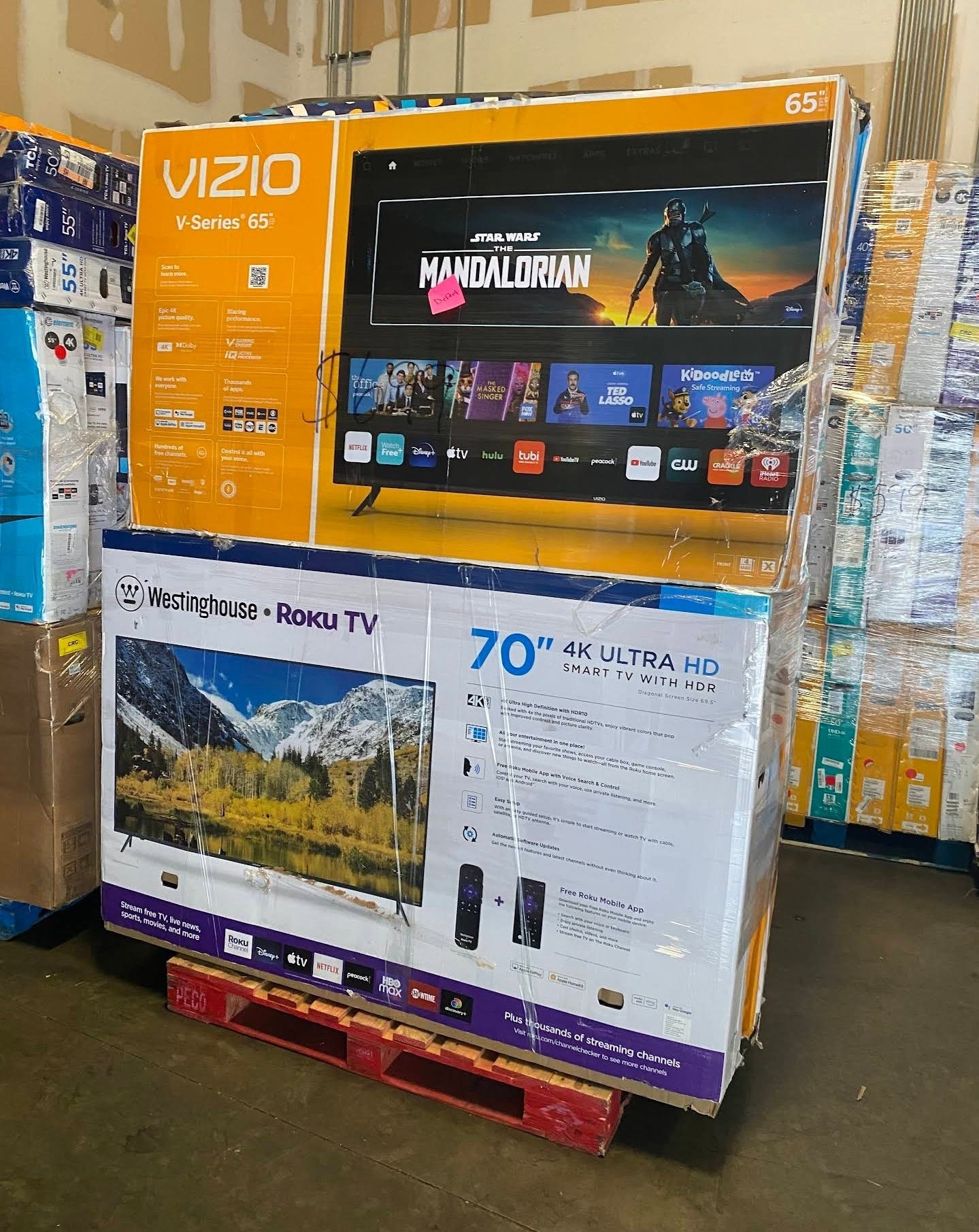
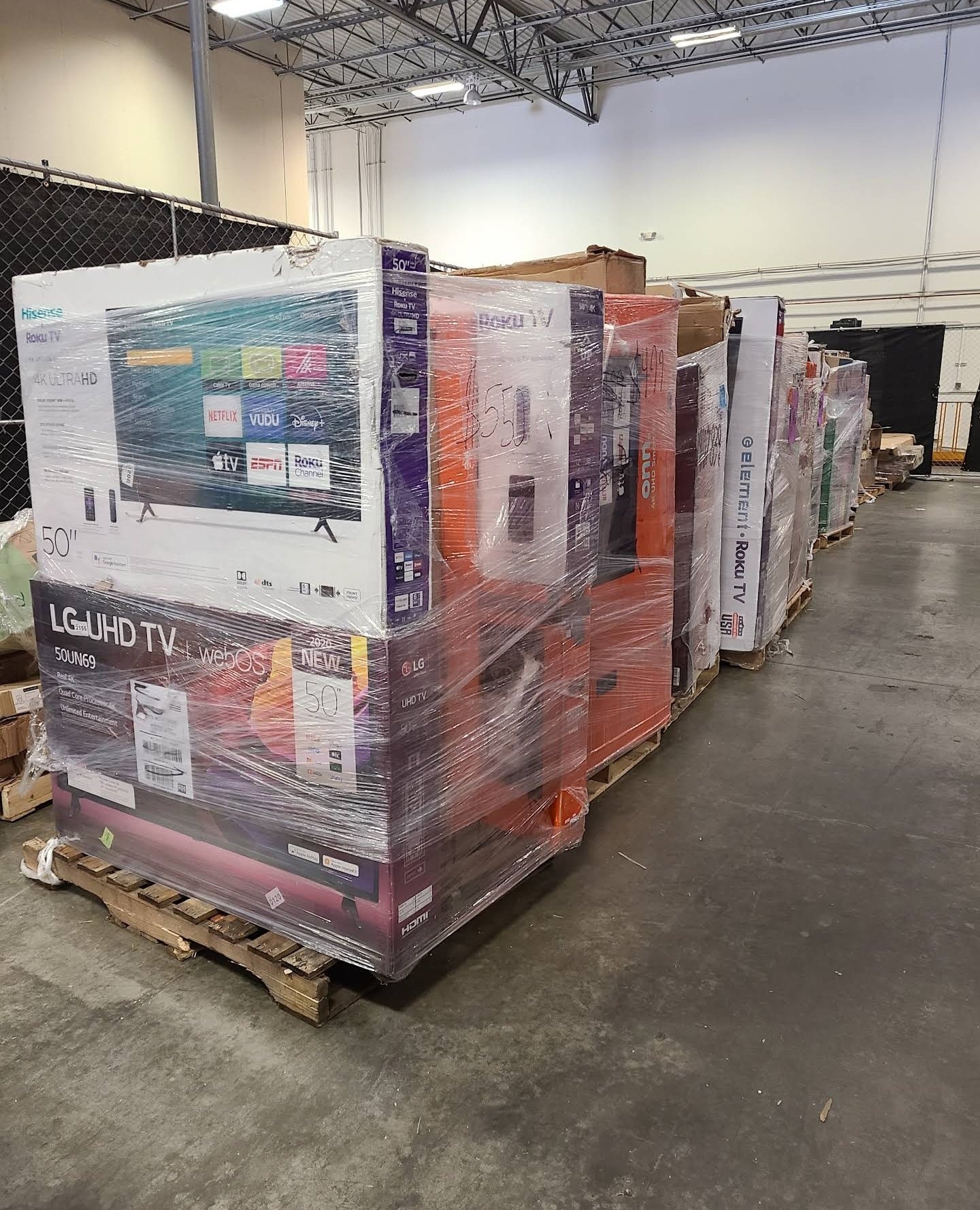

TV pallets for sale are one of the most powerful ways for resellers, bin store owners, and electronics wholesalers to access high-demand inventory at a fraction of retail price.
What Are TV Pallets for Sale?
TV pallets for sale are bulk lots of televisions stacked on pallets and sold through wholesale, surplus, or liquidation channels. These pallets usually come from major retailers as customer returns, overstock, display models, or damaged-box units, and they are grouped together to be sold as a single wholesale lot. As a result, one pallet can contain a mix of brands, sizes, and conditions, giving resellers a wide range of products from a single purchase.
In many cases, buyers seek TV pallets for sale because televisions remain a core consumer electronics category with strong, ongoing demand. People regularly upgrade their TVs for better resolution, bigger screens, or smart features, which means there is always a market for competitively priced units. Therefore, sellers who secure the right TV pallets for sale and process them correctly can tap into a steady stream of repeat customers and referrals.
What You Typically Get
Although every supplier and load is different, most TV pallets for sale include a variety of brands, sizes, and models. For instance, a typical pallet may contain 32-inch, 43-inch, 55-inch, and even 65-inch televisions from a mix of recognizable manufacturers. Some units may be basic HD or Full HD models, while others are 4K UHD smart TVs with built-in streaming apps.
In addition, many TV pallets for sale feature:
-
Mixed conditions, including new, open-box, and customer returns
-
Assorted brands, from store brands to mid-range and premium names
-
Different technologies such as LED, QLED, and occasionally OLED
-
A range of model years, from current-generation sets to slightly older units
Because of this variety, TV pallets for sale can serve multiple customer segments at once. Budget-conscious shoppers may look for small, affordable models, while home-theater buyers may be drawn to larger, feature-rich televisions. As you sort and list each unit, you can position every TV at the right price point for its audience.
Why TV Pallets for Sale Are So Attractive to Resellers
There are several reasons why TV pallets for sale are highly attractive to resellers. First, televisions have a clear perceived value. Even customers who do not know every technical specification understand that TVs are high-ticket items—so when they see competitive prices, they immediately recognize a deal. This value perception helps resellers convert traffic into sales more easily, whether in-store or online.
Secondly, purchasing TV pallets for sale allows buyers to lower their average cost per unit significantly. Because TVs are grouped and sold in bulk, the per-TV cost is usually far below retail, even when you factor in a portion of units that may be non-working or require repair. As a result, resellers can price working units aggressively while still maintaining healthy margins.
Furthermore, TVs are ideal for multiple sales channels. You can sell premium working units online through marketplaces, list local deals on social platforms, and place lower-end or refurbished TVs in brick-and-mortar outlets, flea markets, or bin stores. With the right testing and grading process, every pallet can be broken down into different grades of inventory that match different types of buyers.
Who Should Consider Buying TV Pallets for Sale?
Because TV pallets for sale can be bulky and require careful handling, they are best suited to buyers with some space, tools, and experience in electronics or liquidation. For example, electronics shops, repair centers, and refurbishing businesses can benefit greatly from TV pallets because they can test, fix, and certify units in-house. In addition, bin stores and discount retailers can place working TVs as high-impact feature items that draw customers into the store.
Online resellers with access to local pickup customers can also do well with TV pallets for sale. Since shipping large televisions can be expensive and risky, many sellers focus on local classifieds, marketplace listings, and in-person sales. This approach reduces shipping costs and damage risk while allowing buyers to inspect the TV on the spot.
However, TV pallets for sale may not be ideal for very small sellers with no storage space or no ability to test electronics. Because some units may arrive damaged or non-functional, buyers need a plan for testing, repairing, parting out, or responsibly recycling any TVs that cannot be sold as complete working units. Therefore, anyone considering TV pallets for sale should evaluate their capacity and skills before making a large purchase.
How to Evaluate Before You Buy
To make smart decisions, you should carefully evaluate any TV pallets for sale before committing your money. First, pay close attention to the condition details. If the pallet is advertised as customer returns, expect a mix of working, partially working, and non-working units. If it is labeled as overstock or open-box, the percentage of working TVs may be higher, but the pallet price will usually reflect that.
Next, look for manifests or at least sample information. Even when the load is unmanifested, some suppliers provide an approximate count of units, a range of screen sizes, and a general idea of brands included. The more information you have, the easier it is to estimate your average resale price and potential profit. Additionally, ask whether accessories such as stands, remotes, and power cords are included, since these items can affect your total cost and buyer perception.
You should also ask about warranty and return policies from the supplier. While many liquidation deals are sold “as is,” some vendors may offer limited guarantees on freight damage or extreme misrepresentation. Understanding these terms in advance helps you manage risk and plan how much capital you are comfortable investing in TV pallets for sale.
Strategies to Maximize Profit
Once you receive your TV pallets for sale, a structured processing strategy will help you maximize profit. Start by carefully unpacking and inspecting each TV, checking for visible damage to screens, frames, and ports. Then, power-test each unit to determine whether it turns on, displays a picture correctly, and responds to controls. As you test, separate TVs into categories such as fully functional, minor issues, major issues, and non-working.
For working units in good cosmetic condition, clean them thoroughly and photograph them from multiple angles. Create detailed listings that highlight screen size, resolution (such as 1080p or 4K), smart features, and inputs like HDMI and USB. Emphasize key selling points such as streaming apps, gaming performance, or energy efficiency, and clearly state whether the original remote, stand, and packaging are included.
For TVs with minor defects, consider selling them at a discount with full disclosure, or pairing them with inexpensive replacement remotes and universal stands. For non-working units, you can often recover value by selling them for parts—boards, screens, housings, and stands can still be useful to repair shops and DIY technicians. In some cases, partnering with a local repair technician can turn borderline units into profitable refurbished TVs.
At the same time, mix your sales channels. Use online marketplaces for higher-end and mid-range working TVs, while pushing budget units through local channels, flea markets, or in-store promotions. Over time, track your metrics diligently: note how many TVs per pallet are fully functional, your average selling price per unit, and your total profit per load. This data will help you refine which types of TV pallets for sale are most profitable for your specific business.
Reviews
There are no reviews yet.