

Toys pallets for sale are one of the most reliable and profitable categories for liquidation buyers, bin store owners, and online resellers looking to stock fun, family-friendly products at a fraction of retail cost.
What Are Toys Pallets?
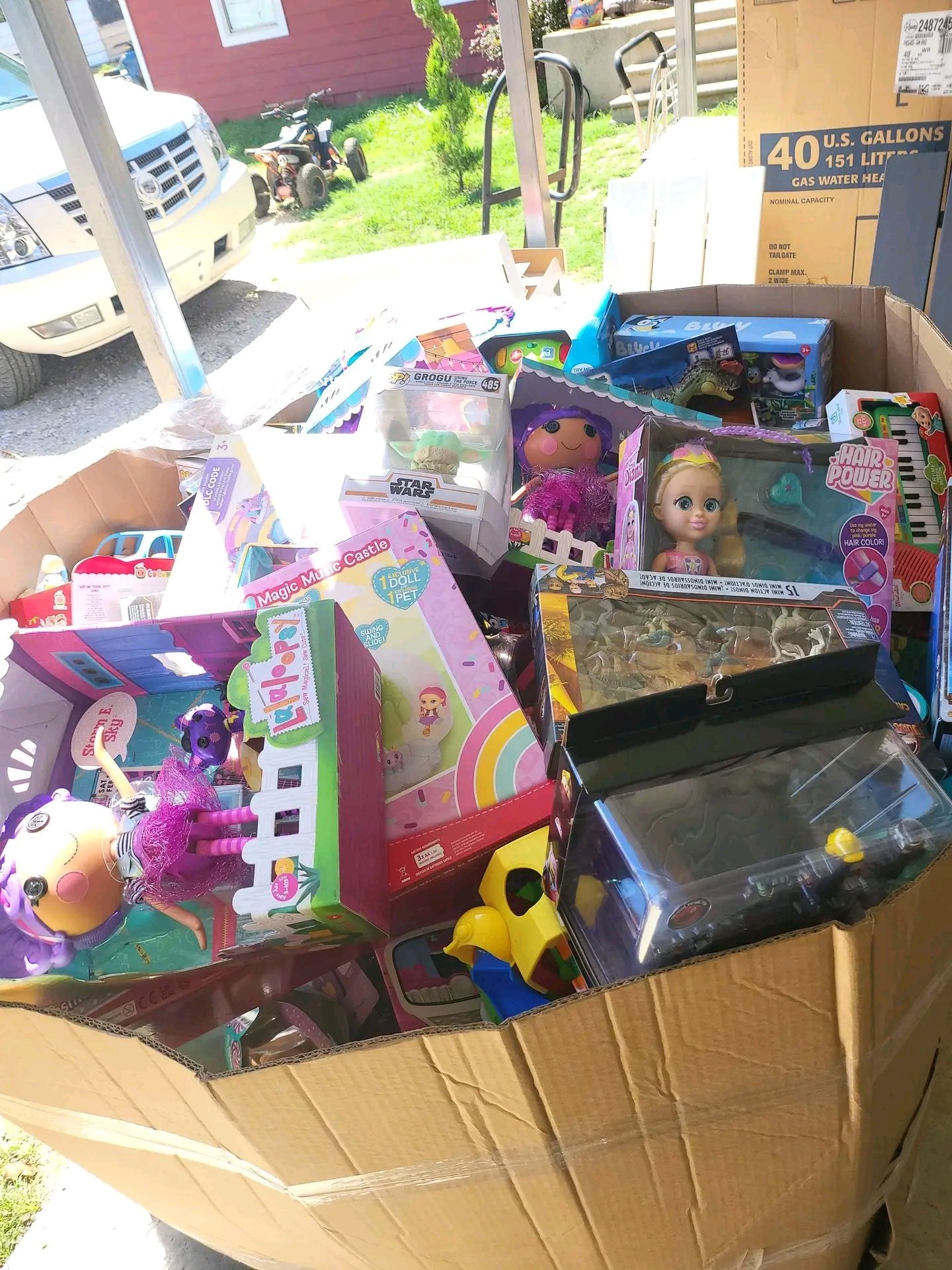
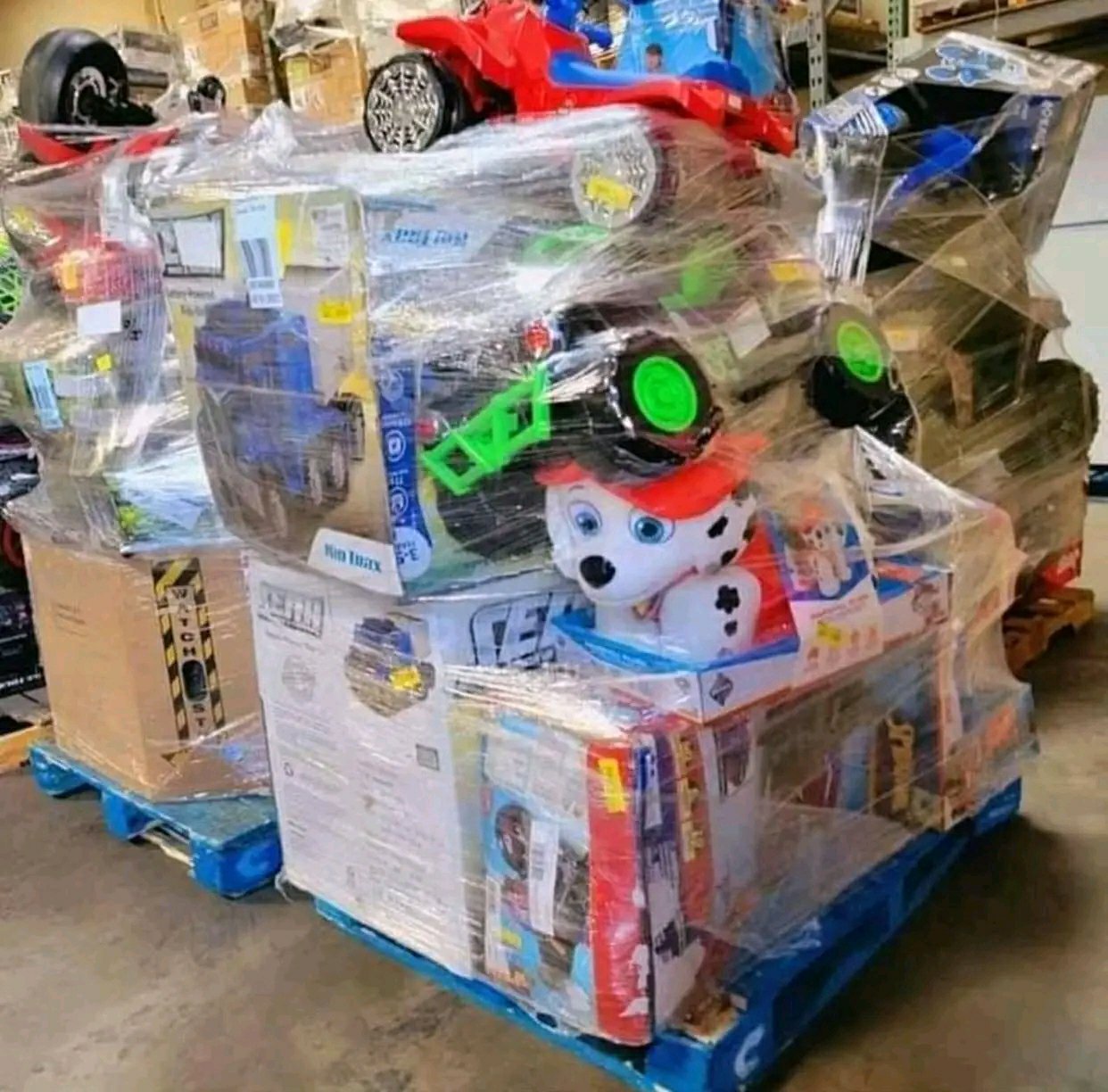
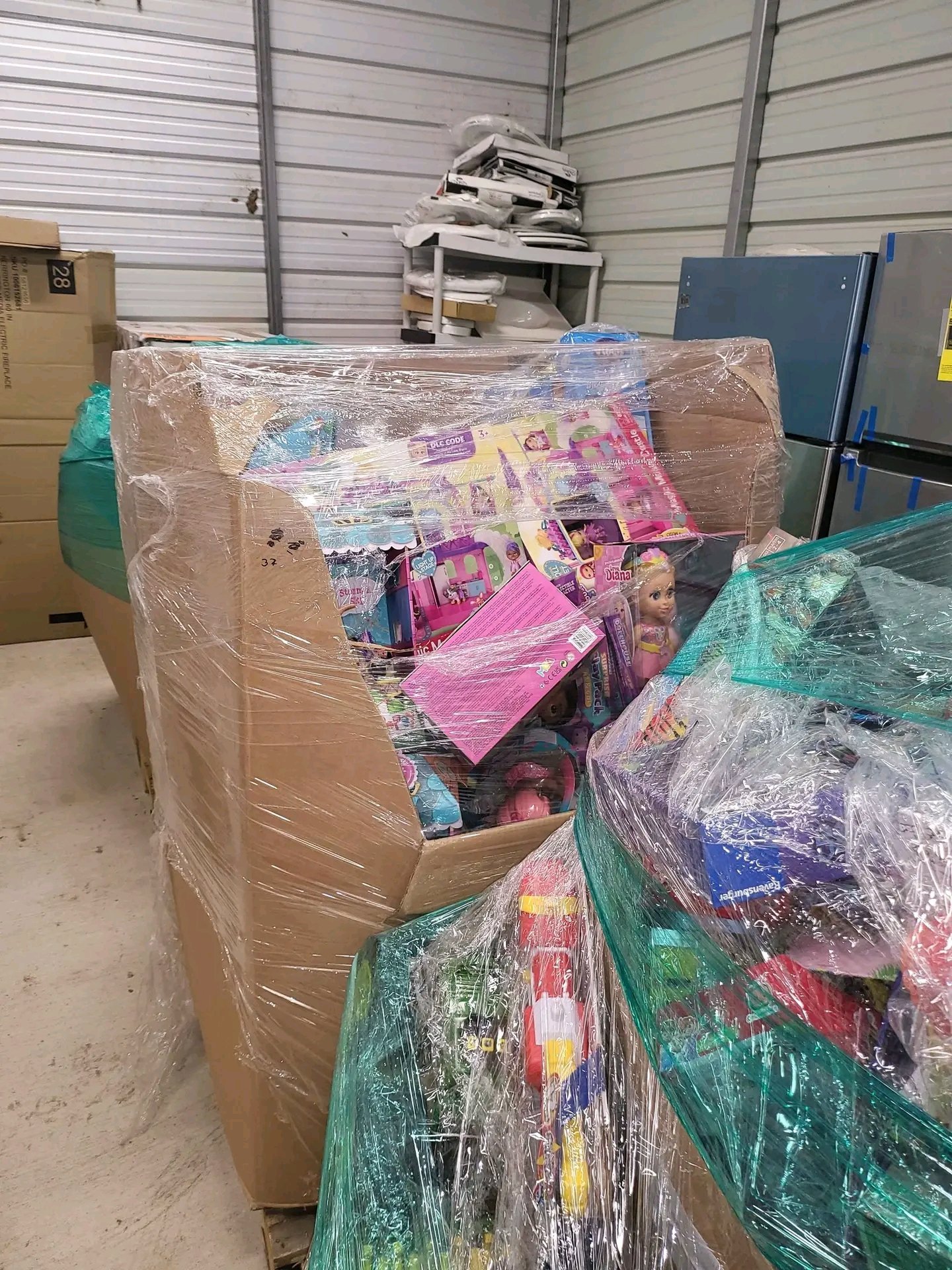
Toys pallets for sale are bulk lots of children’s toys stacked on wooden or plastic pallets and sold by wholesalers, liquidation warehouses, and surplus retailers. Typically, these pallets come from major chain stores as overstock, shelf pulls, seasonal clearance, or customer returns, which means you get a wide mix of items in a single load. As a result, toys pallets give resellers an easy way to access hundreds of units without negotiating dozens of individual suppliers.
In many cases, toys pallets contain recognizable brands, trending toys, and timeless classics that parents and gift-givers already trust. Because of this, the products you pull from toys pallets are often easier to advertise, easier to price, and easier to sell across multiple channels. Consequently, toys pallets have become a core category for many resale businesses, especially those that focus on family-oriented merchandise.
What You Typically Find in these Pallets
Although every load is different, toys pallets usually include a diverse assortment that appeals to various age groups and interests. For instance, one pallet might include board games, dolls, action figures, stuffed animals, building sets, and STEM kits all together. Another pallet may lean more toward outdoor toys, such as ride-ons, scooters, sports sets, and inflatables, while still including some indoor entertainment.
Beyond that, many toys pallets also feature:
-
Educational toys like puzzles, flashcards, and learning tablets
-
Arts and crafts kits, coloring sets, and creative DIY projects
-
Electronic toys, remote-control cars, and small gadgets
-
Seasonal toys for holidays, birthdays, and special occasions
Because the mix can be so broad, toys pallets are especially useful if you run a bin store or discount outlet and need high-volume, low-duplicate inventory that keeps your customers excited. At the same time, online sellers benefit from having many different SKUs to list, which in turn increases their visibility and overall sales potential.
Why Toys Pallets Are in High Demand
Toys pallets remain in high demand for several reasons. First, parents and families consistently purchase toys, not only for birthdays and holidays but also for rewards, learning, and everyday play. This ongoing demand means toys tend to move quickly when priced correctly, whether you sell locally or through e-commerce platforms. Additionally, toys are often less technical than electronics or appliances, so condition issues are usually easier to spot and explain in listings.
Secondly, buying toys pallets allows resellers to access brand-name and trending toys at a much lower cost per unit than retail. Since pallets are sold as bulk lots, your average cost per item generally drops significantly, leaving room for strong margins even when you price aggressively. Moreover, because many toys are lightweight and compact, they are economical to ship, which is ideal for online sellers.
Furthermore, toys pallets can help you diversify your store’s product mix. Even if your main niche is general merchandise or home goods, adding toys from pallets can attract families and increase foot traffic or site traffic. Once shoppers are on your platform for toys, they often browse other categories, raising your average order value.
How to Choose the Right Toys Pallets
Because not all toys pallets for sale are the same, you should carefully evaluate each offer before you buy. To begin, pay close attention to the condition description—terms like new, overstock, shelf pulls, and customer returns will tell you what level of inspection and testing you should expect to perform. Generally, pallets that lean toward new and overstock items will require less work but may come at a slightly higher price, while pallets heavy in returns might involve more sorting and testing yet offer higher potential margins.
Next, whenever possible, look for manifests or sample lists. Even if you cannot see every SKU, having a rough idea of the brands, categories, and age ranges included in a toys pallet helps you decide whether it fits your audience. If your customers prefer educational and STEM toys, for example, a pallet full of generic plush might not be ideal. Conversely, if you run a bargain store where price is the main driver, a mixed, unmanifested toys pallet might work perfectly as long as the cost per unit is low enough.
You should also consider seasonality. Toys pallets purchased ahead of major holidays can be extremely profitable if you receive giftable, in-demand products. However, when you buy after a season, you may get heavily discounted seasonal toys that you might need to hold until the next year or sell at very low prices. Therefore, align your toys pallet purchases with your storage capacity and cash flow.
Strategies to Maximize Profit
Once you secure your toys pallets for sale, you need a clear strategy to convert that bulk inventory into steady revenue. First, sort the toys by type, brand, and condition. Separate new-in-box items from open-box or slightly damaged items, and group similar products together. This makes it easier to create accurate listings, prepare bundles, and quickly identify any toys that may not be suitable for resale.
Then, consider a tiered selling approach. High-value branded toys in pristine condition can be sold individually online at strong margins. Mid-tier toys can be bundled—such as “girls’ surprise toy bundles,” “STEM learning packs,” or “birthday party favor sets”—to increase perceived value and move multiple units in one transaction. Lower-value toys, or items with damaged packaging, can be sold in local markets, dollar tables, or bin stores where customers are more focused on price than presentation.
In addition, presentation matters. Use clear photos and concise descriptions that highlight age range, brand, and features. Because parents are often cautious about safety, showing labels, packaging, and condition honestly helps build trust. If you sell locally, arranging toys by category or price range makes shopping easier and encourages impulse buys.
Finally, track your numbers. Calculate your total cost per pallet, divide by the number of sellable items, and determine your average cost per unit. As you sell through multiple toys pallets over time, this data will show you which sources, price points, and mixes are most profitable, so you can focus on the best-performing opportunities.
Reviews
There are no reviews yet.